Benefits, Drawbacks, and the Real Cost of Clinical Documentation Models
Healthcare organizations are under sustained pressure to improve documentation efficiency while maintaining clinical accuracy, compliance integrity, and financial performance. Artificial intelligence has introduced two dominant models into clinical workflows:
AI-assisted medical transcription with human quality assurance
Ambient AI scribes that generate documentation directly from live patient encounters
Although both approaches aim to reduce administrative burden and physician burnout, they differ significantly in workflow design, risk exposure, and where the “final responsibility layer” resides.
Understanding these differences is essential for practices, hospitals, and healthcare networks evaluating long-term documentation strategy.
What Is AI-Assisted Medical Transcription?
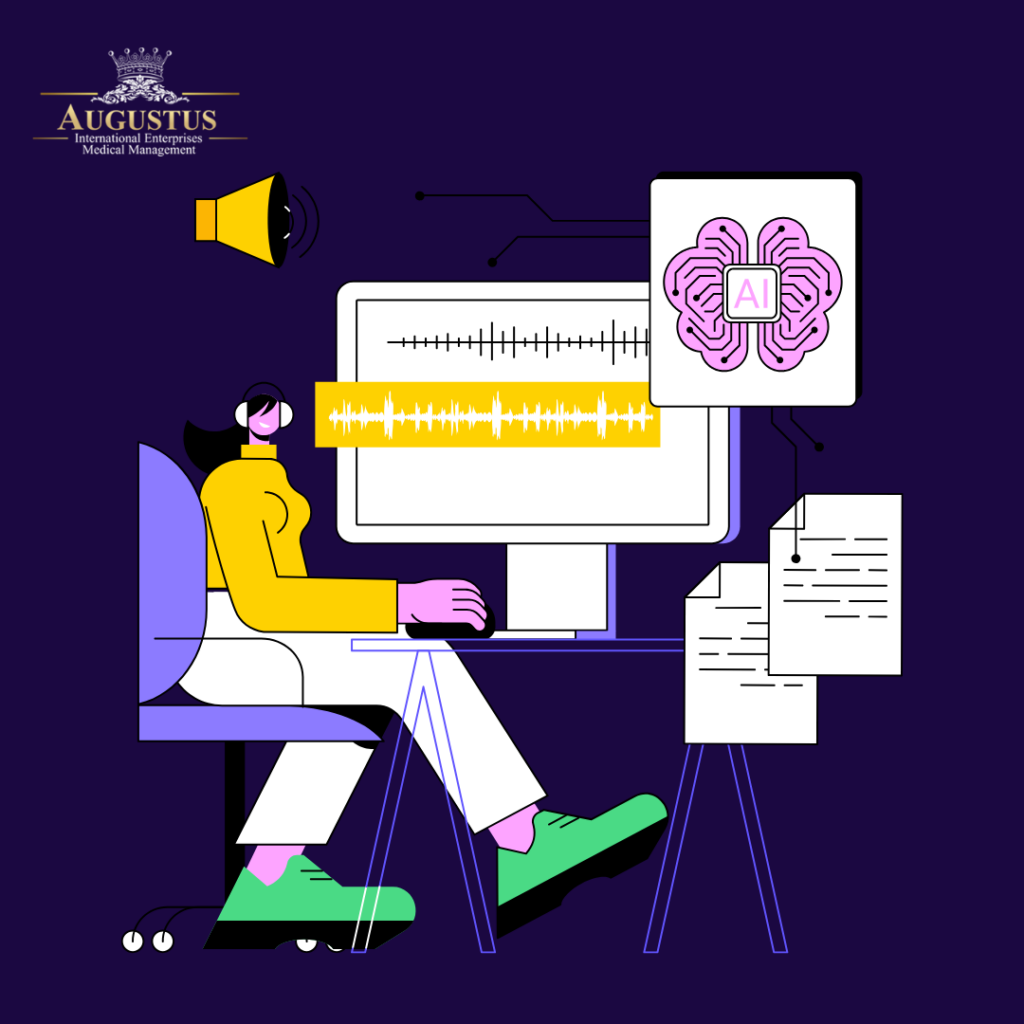
AI-assisted medical transcription uses speech recognition and generative AI to convert audio or recorded encounters into structured clinical documentation. Unlike fully automated systems, it incorporates human quality assurance (QA) before final delivery.
Typical Workflow
- Audio or dictation is captured (telehealth, in-person, IME, surgical notes, etc.)
- Human transcription specialists review for:
Clinical accuracy
Terminology correction
Formatting and structure
Missing or unclear content
- AI generates a draft transcript
- Physician performs final review and sign-off
This creates a human-in-the-loop system, where AI accelerates production but does not independently finalize clinical documentation.
What Is an Ambient AI Scribe?
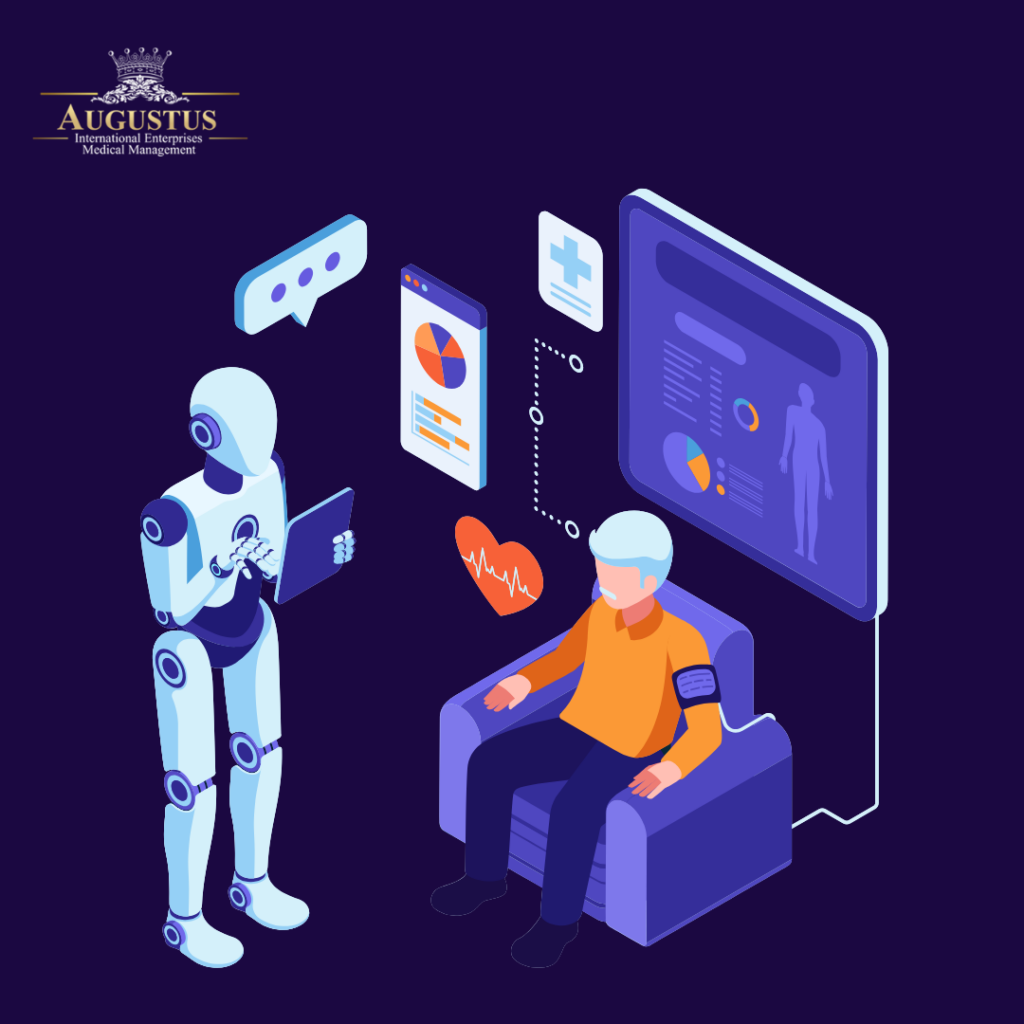
Ambient AI scribes passively listen during patient encounters and generate structured clinical notes in real time. These systems use large language models to interpret dialogue and produce SOAP notes, encounter summaries, and sometimes suggested codes or orders.
Typical Workflow
AI records and processes live patient conversation
AI generates structured clinical note
Physician reviews, edits, and signs the note in the EHR
Ambient systems are designed to eliminate manual documentation during the encounter, shifting responsibility toward real-time AI interpretation and physician validation.
Shared Benefits of Both Systems
Despite their differences, both models represent a meaningful improvement over traditional documentation workflows.
Reduced Physician Burnout
Both approaches reduce time spent on documentation compared to legacy manual typing.
Less after-hours charting (“pajama time”)
Reduced cognitive load from manual note creation
Improved focus during patient encounters
However, burnout reduction depends heavily on how much post-AI correction work remains with the physician.
Improved Workflow Efficiency
Both systems can:
Accelerate note generation
Reduce administrative bottlenecks
Improve chart completion rates
Support higher patient throughput
The key difference is where efficiency is gained—in physician time vs. back-office QA operations.
Enhanced Patient Interaction
By reducing manual typing during visits:
Eye contact improves
Patient engagement increases
Visit flow becomes more conversational
Clinician attention shifts toward care delivery rather than data entry
Key Differences in Documentation Philosophy
The most important distinction is not technological; it is operational.
Dimension | AI-Assisted Transcription | Ambient AI Scribe |
|---|---|---|
Primary output | Draft + human-reviewed note | AI-generated note |
QA responsibility | Documentation specialists | Physician |
Verbatim capability | High | Limited |
Real-time output | No | Yes |
Clinical nuance handling | High (human-reviewed) | Variable |
Hallucination risk | Lower | Higher |
Legal defensibility | Stronger (reviewed record) | Dependent on physician edits |
Burnout Reduction: A Shared but Uneven Outcome
Both models reduce burnout, but they redistribute workload differently.
Ambient AI Scribes
Ambient systems reduce typing during visits but often shift burden to:
Post-visit note correction
Verification of AI-generated summaries
Identification of omissions or inaccuracies
In effect, physicians become the final editorial authority over AI-generated content.
AI-Assisted Transcription
AI-assisted transcription reduces both:
Documentation creation burden
Editing burden on physicians
Because human QA occurs upstream, physicians primarily focus on clinical validation rather than structural correction.
The Hidden Cost: Physician Review Time
A critical but often overlooked factor is the cost of physician editing time.
Even if ambient systems reduce documentation time per visit, every note still requires physician review.
Ambient AI Scribe Cost Structure
Physician responsibilities include:
Correcting inaccuracies
Verifying clinical content
Editing structure and completeness
Ensuring compliance before signing
Even 2–4 minutes per note scales significantly:
20 patients/day → 40–80 minutes/day
100 patients/week → 3–6+ hours/week
This is high-value clinical time used for documentation QA.
AI-Assisted Transcription Cost Structure
With human-in-the-loop transcription:
Documentation specialists perform detailed review and correction
Physicians perform final clinical validation only
Physician review is typically limited to:
Medical accuracy confirmation
Final approval and sign-off
This shifts the intensive editing workload away from clinicians and into a structured QA pipeline.
Accuracy and Risk Considerations
AI-Assisted Transcription Strengths
Human correction reduces transcription errors
Stronger handling of medical terminology
Better consistency across complex documentation
Lower risk of missing or misinterpreted clinical detail
Ambient AI Scribe Risks
AI hallucinations (inferred or incorrect content)
Omission of clinically relevant details
Misinterpretation of conversational context
Variable performance in multi-speaker or noisy environments
Because ambient systems generate narrative summaries from conversation, subtle inaccuracies can propagate into the permanent medical record if not caught during physician review.
Specialty and Use Case Fit
AI-Assisted Transcription Is Strongest For
Independent Medical Examinations (IMEs)
Psychiatry and behavioral health
Radiology and pathology reports
Surgical and operative notes
Workers’ compensation documentation
Medico-legal reporting
Specialty-heavy documentation environments
Ambient AI Scribes Are Strongest For
High-volume outpatient visits
Primary care workflows
Routine follow-ups
EHR-integrated clinical environments
Practices prioritizing real-time note availability
These use cases require precision, structure, and often verbatim fidelity.
Compliance and Defensibility
Medical documentation is not just operational—it is legal.
AI-Assisted Transcription Advantage
Human QA creates a review trail
Greater consistency in documentation standards
Reduced risk of unnoticed AI errors entering the record
Stronger audit readiness
Ambient AI Considerations
Physician is sole verifier of AI-generated content
Documentation integrity depends on provider vigilance
Greater exposure to unnoticed AI-generated inaccuracies
Regulatory expectations continue to reinforce that clinicians remain fully responsible for final documentation regardless of automation level.
The Real Strategic Difference
Both systems reduce documentation burden. The distinction lies in where quality assurance lives.
Ambient AI scribes shift QA responsibility to physicians
AI-assisted transcription shifts QA responsibility to trained documentation specialists
This is not a technology debate—it is a resource allocation decision.
Conclusion: Hybrid Models Will Define the Future
The future of clinical documentation is not fully automated—it is layered intelligence with human oversight.
The most effective systems combine:
AI for speed and scalability
Human reviewers for accuracy and consistency
Physician oversight for clinical integrity
Organizations evaluating documentation strategy should focus less on automation alone and more on:
Who is best positioned to perform the final quality assurance layer?
In many environments, the answer is not the physician.
It is a structured, trained documentation team supported by AI.
That is where accuracy, efficiency, and sustainability converge.
Learn more about how we can support your organization with our documentation support services HERE.
Recommended Financial Layer Resources:
Download the Healthcare Financial Stack Self-Assessment Checklist HERE
Contact AIE Medical Management for RCM & Contract Negotiation solutions HERE
Contact the INSTANT claim payment solution HERE
Contact the Financial Intelligence solution HERE
Author
-
Healthcare executive and physician-trained operator focused on building organizations that support physicians — not just service them.
I founded AIE Medical Management to reduce administrative burden and serve as a strategic partner to providers navigating operational complexity, revenue pressure, and technology overload. My approach is simple: align clinical integrity with operational discipline.
Over the past 15+ years, I’ve led and advised healthcare and healthtech organizations across startup and enterprise environments — from growth-stage companies building infrastructure to established, revenue-producing organizations seeking scale and stability.
My work spans medical management, revenue cycle optimization, healthtech enablement, hybrid care models, and executive-level operational leadership.
I operate across C-suite, President, and senior leadership roles, including interim and fractional engagements, partnering with founders, boards, and investors to strengthen operations and advance mission-driven healthcare.
Open to conversations with healthcare and healthtech organizations focused on sustainable growth and real impact.