Cash Flow Resiliency and the High Cost of Waiting to Get Paid
Healthcare organizations are often profitable on paper and strained in practice. The gap between those two realities almost always comes down to cash flow timing.
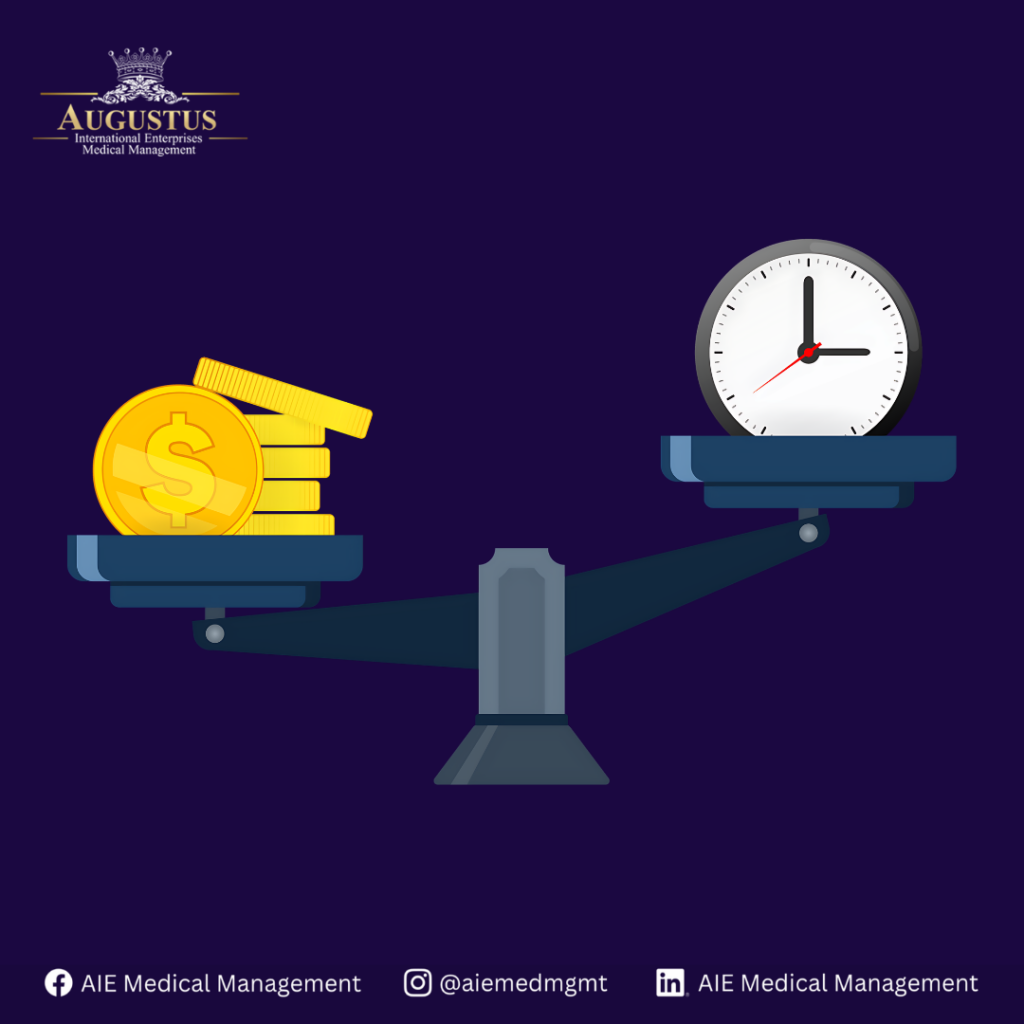
Unlike most industries, healthcare delivers services long before payment is received. Reimbursement cycles of 60, 90, or even 120 days have become normalized—yet the operational consequences of those delays are anything but benign. In today’s environment, cash flow resiliency is no longer a financial preference. It is an operational requirement.
Revenue Is Not the Same as Cash
One of the most persistent misconceptions in healthcare finance is the assumption that strong revenue equals financial health. In reality, revenue without liquidity creates fragility.
Consider a mid-sized practice generating $1.5 million per month in charges. On paper, that’s an $18 million annual operation. But if average collections lag 75 days, the organization is effectively floating $3.5–$4 million in earned but unavailable revenue at any given time.
That gap is where strain lives.
Organizations in this position often:
-
show healthy income statements
-
maintain thin operating cash balances
-
rely on timing workarounds to meet obligations
The business is performing—but the cash isn’t keeping up.
The Operational Impact of Reimbursement Lag
Waiting to get paid affects far more than the balance sheet. Over time, it reshapes how organizations operate and make decisions.
1. Reactive Decision-Making
When cash availability is uncertain, leadership decisions skew conservative.
Example: A clinic wants to add a provider expected to generate $40,000 per month in net collections. The revenue case is sound, but leadership hesitates because payroll and onboarding costs hit immediately—while reimbursement won’t materialize for months.
Growth stalls, not due to lack of opportunity, but lack of liquidity.
3. Staff and Vendor Strain
Cash timing issues ripple outward. Payroll confidence, vendor payment terms, and staffing decisions are all influenced by how predictable cash inflows feel—not how strong revenue looks. Financial stress becomes operational stress, even in otherwise well-run organizations.
2. Increased Reliance on Credit
To bridge timing gaps, organizations often turn to lines of credit.
Example:
A $1 million revolving credit line at 8% interest used consistently to cover operating gaps costs roughly $80,000 annually—not for expansion, but for waiting.
Over time, credit becomes infrastructure instead of insurance.
4. Clearer Financial Visibility
Because internal teams remain close to performance data, leadership gains more than outcomes. They gain early visibility into patterns, bottlenecks, and risk—while there’s still time to act.
What Cash Flow Resiliency Actually Means
Cash flow resiliency does not mean eliminating payer delays. It means designing financial infrastructure that absorbs those delays without disrupting operations.
A resilient cash flow model allows organizations to:
-
predict inflows with confidence
-
meet obligations without timing gymnastics
-
fund growth initiatives proactively
-
reduce exposure to traditional debt
In practice, this means having options—not scrambling.
The Shift from Passive to Designed Cash Flow
Traditionally, healthcare organizations have accepted payer timelines as immovable. Modern financial stacks challenge that assumption.
Leading organizations are shifting from passive models—where cash timing is dictated externally—to designed models that introduce flexibility and control.
Example:
An organization with predictable monthly charges but delayed collections introduces a structured way to access a portion of earned revenue earlier. The total revenue does not change—but the timing does.
The result:
-
stable operating cash
-
accurate budgeting
-
fewer emergency decisions
Cash flow becomes intentional instead of incidental.
How Cash Flow Resiliency Strengthens the Financial Stack
Cash flow sits at the center of the financial stack, connecting billing, bookkeeping, and reimbursement strategy.
-
Clean billing improves predictability
-
Liquidity supports operational continuity
-
Reliable cash timing feeds accurate financial reporting
-
Stability creates leverage in payer negotiations
Without cash flow resiliency, improvements elsewhere take longer to show impact.
The Hidden Cost of “Normal” Delays
Perhaps the most expensive assumption in healthcare finance is that delayed reimbursement is simply “how it works.”
The cost is not just interest or inconvenience—it is:
-
postponed hiring
-
delayed technology adoption
-
constrained service expansion
-
leadership fatigue
Over time, organizations that accept cash flow fragility as normal operate defensively—even when demand and performance justify growth.
Final Thought
Healthcare organizations don’t need to choose between control and expertise. Hybrid billing models show that both are possible—when billing is designed intentionally, not inherited by default.
As reimbursement pressure increases and margins tighten, the question isn’t whether billing needs to evolve. It’s whether organizations are willing to treat it as infrastructure rather than a task.
In the next article, we’ll examine the second layer of the modern healthcare financial stack: cash flow resiliency—and why waiting to get paid is one of the most expensive habits in healthcare
Cut right to the chase! Contact the resources below about each layer:
Download the Healthcare Financial Stack Self-Assessment Checklist HERE
Contact AIE Medical Management for RCM & Contract Negotiation solutions HERE
Contact the INSTANT claim payment solution HERE
Contact the Financial Intelligence solution HERE